
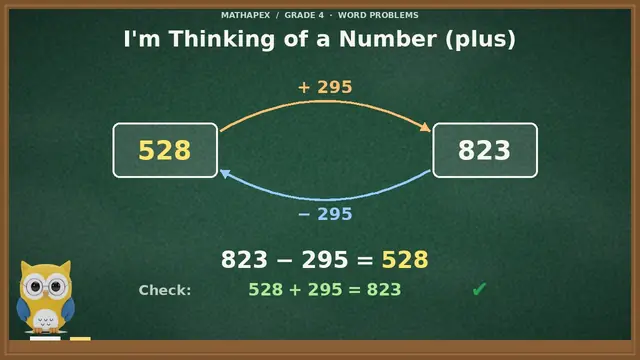
 Length: 0:42I'm Thinking of a Number (plus)My number plus 148 makes 600. What is my number?Grade 4
Math stories
Word problems to solve along with
I'm thinking of a number. How much is one apple? How much change do you get? Theo cracks one example step by step – then your child solves one on their own.
Length: 0:42I'm Thinking of a Number (plus)My number plus 148 makes 600. What is my number?Grade 4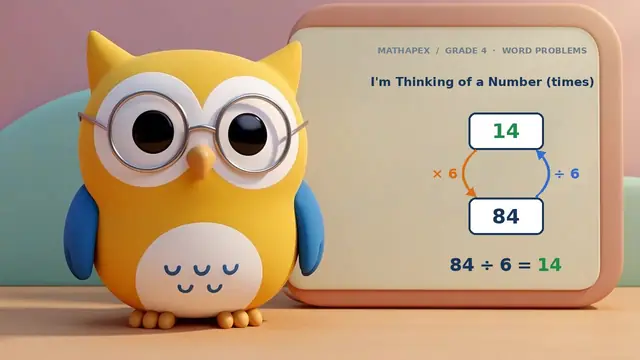 Length: 0:29I'm Thinking of a Number (times)My number times 4 makes 96. What is my number?Grade 4
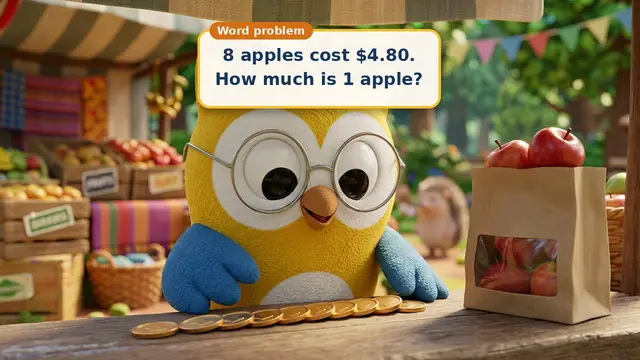 Length: 0:35What Does One Cost?6 rolls cost 2 dollars 40 cents. How many cents does one roll cost?Grade 4
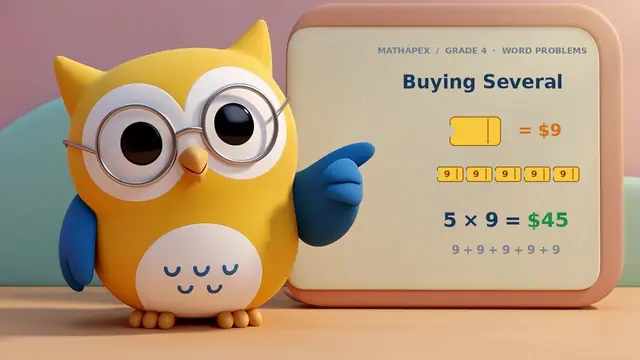 Length: 0:28Buying SeveralA book costs 12 dollars. How much do 7 books cost?Grade 4
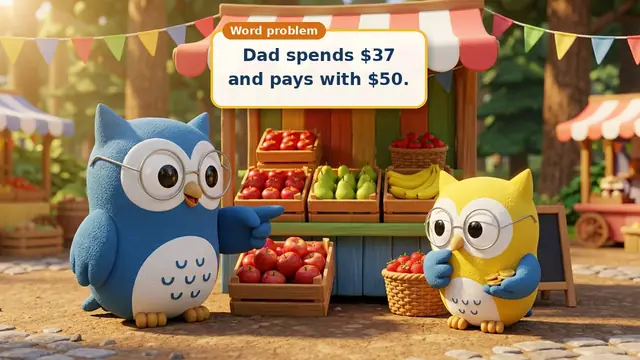 Length: 0:38ChangeShopping costs 64 dollars. You pay with 100 dollars. How much change do you get?Grade 4
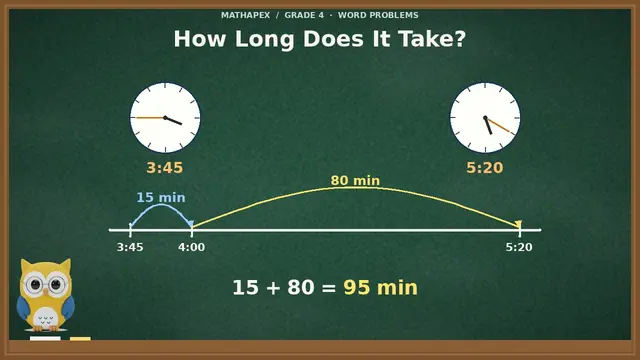 Length: 0:34How Long Does It Take?A trip lasts from 2:50 to 4:10. How many minutes is that?Grade 4
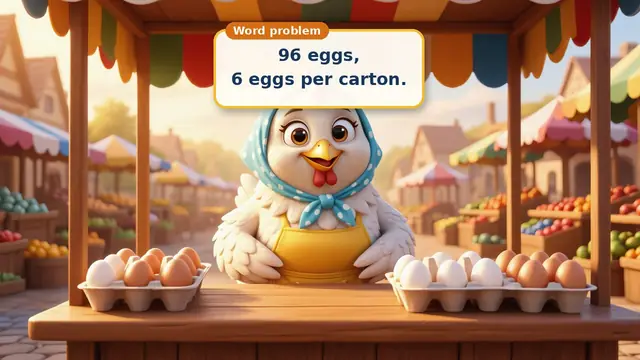 Length: 0:39Sharing Fairly144 candies are shared among 8 children. How many does each child get?Grade 4
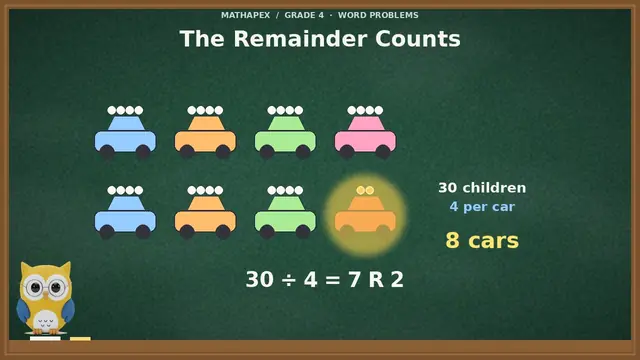 Length: 0:32The Remainder Counts50 children, 6 per boat: how many boats do we need?Grade 4
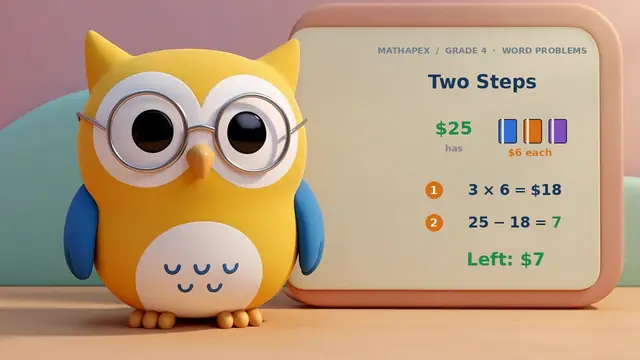 Length: 0:35Two StepsTim has 40 dollars and buys 4 T-shirts for 8 dollars each. How much money is left?Grade 4
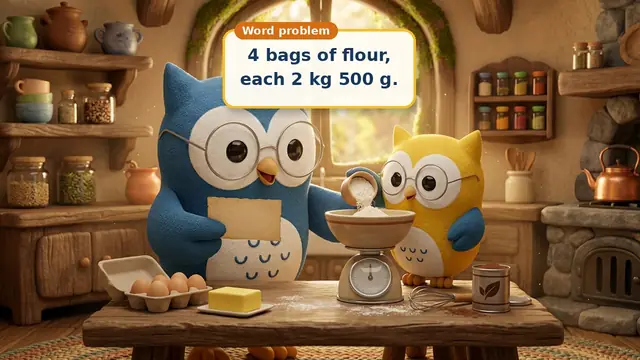 Length: 0:36Kilograms and Grams6 sacks weigh 1 kg 500 g each. How many kilograms in all?Grade 4
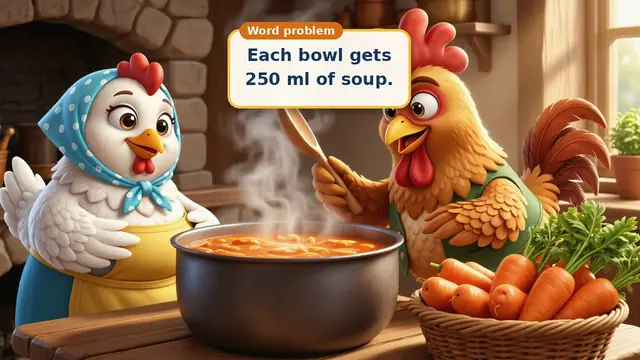 Length: 0:32Liters and MillilitersHow many liters of soup do we need for 8 bowls of 250 ml?Grade 4
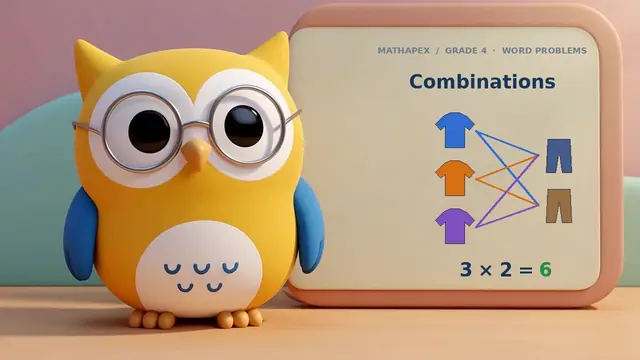 Length: 0:29Combinations4 flavors, in a cup or a cone: how many choices are there?Grade 4
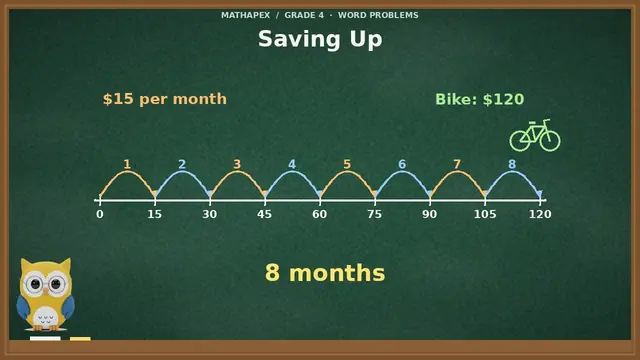 Length: 0:34Saving UpBen saves 12 dollars every week. How many weeks until he has 84 dollars?Grade 4
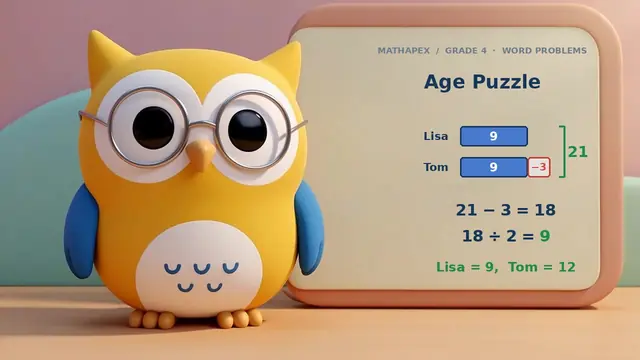 Length: 0:39Age PuzzleMia is 4 years older than Ben. Together they are 20. How old is Ben?Grade 4
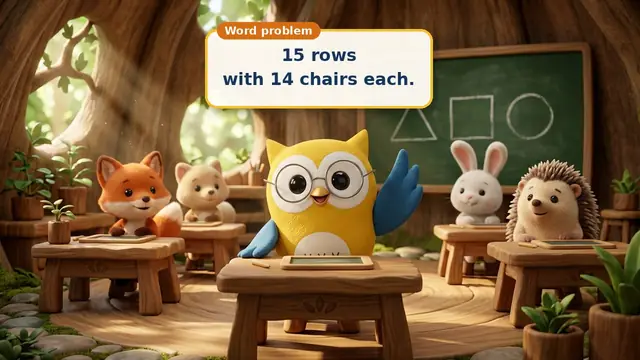 Length: 0:38Multiplying Bigger Numbers24 crates with 12 bottles each: how many bottles?Grade 4
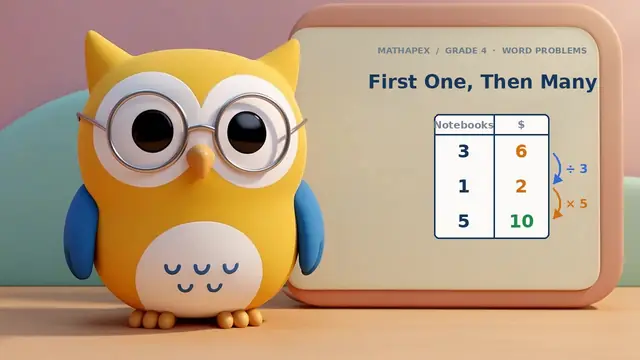 Length: 0:36First One, Then Many4 pencils cost 8 dollars. How much do 7 pencils cost?Grade 4
What your child practises
- Working backwards: “I’m thinking of a number …” – plus turns into minus, times turns into divided by.
- Money: the price of one item, buying several, change and saving up.
- Measures: time spans, kilograms and grams, liters and milliliters.
- Strategies: splitting big numbers, two-step problems, dealing with remainders, combinations and age puzzles.
How to crack a word problem
- What do I know? Pick out the important numbers.
- What is the question? Say it again in your own words.
- Which operation fits? Plus, minus, times or divided by – or two steps one after the other.
- Does the answer fit? Check it and remember the unit.
An example: 30 children go to the zoo and each car holds 4. 30 ÷ 4 = 7 remainder 2 – but you still need 8 cars, because those two children need a ride too.
Your child's answers stay on this device. They are neither saved nor sent anywhere, and no sign-up is needed.